
Emergency water extraction
Removal of standing water with professional pumps and extraction tools, plus initial steps to protect flooring, cabinets, and contents where possible.
Serving Cypress, Texas & surrounding areas
24/7 Emergency Response
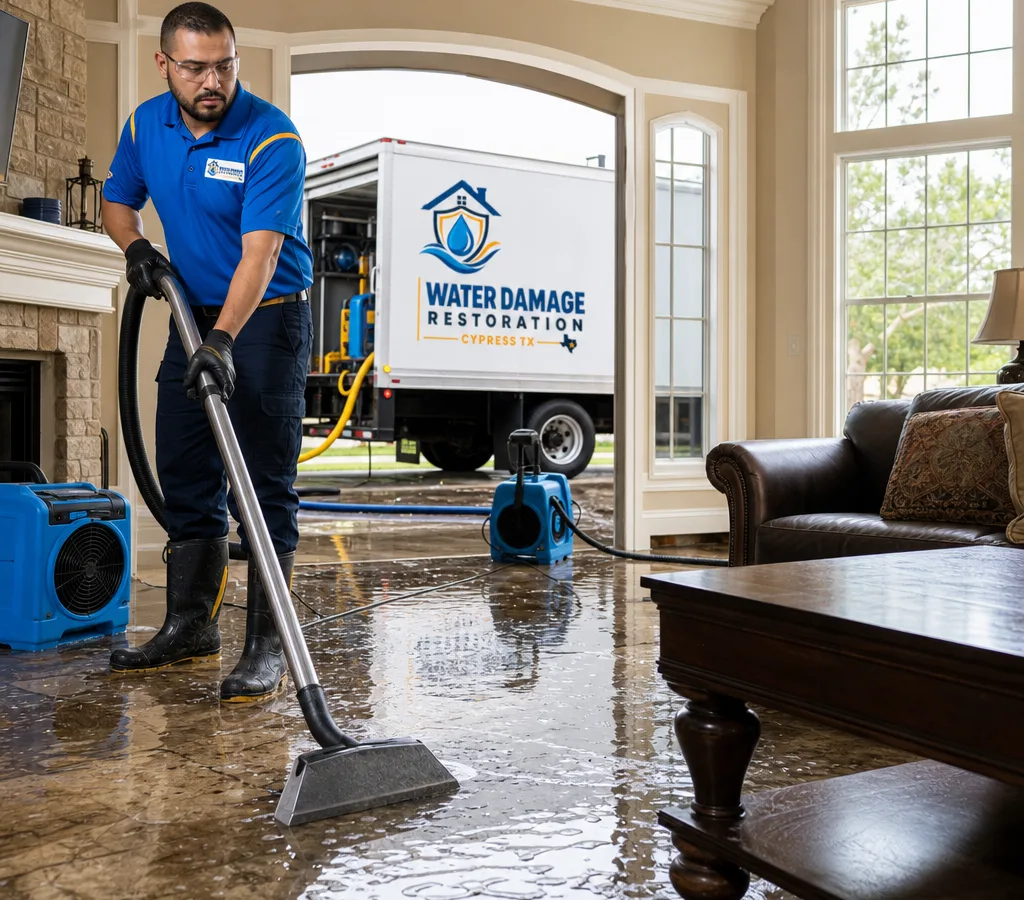
Water spreads fast in Cypress homes. Our team responds quickly to stop the loss, remove moisture, dry the structure, and document the work so you can make smart repair decisions.
If you searched for water damage cypress tx, you are likely dealing with an active leak, soaked floors, or the after-effects of an overflow or storm. The biggest risk is hidden moisture. Water can move under flooring, into baseboards, behind drywall, and down into wall cavities, where it can swell materials and create conditions that lead to odor and microbial growth.
Water Damage Restoration Cypress TX focuses on the practical sequence that protects the structure: stop the source, extract standing water, map moisture, set drying equipment correctly, and track progress until the building materials are back to a safe moisture level. Then we help you plan the repairs with a clear scope so you are not guessing what needs to be replaced.
In Cypress and the northwest Houston area, high humidity can slow evaporation. That makes controlled drying and dehumidification especially important, even when the surface looks dry. Our approach is to treat water damage like a building-science problem, not a quick cleanup.
Removal of standing water with professional pumps and extraction tools, plus initial steps to protect flooring, cabinets, and contents where possible.
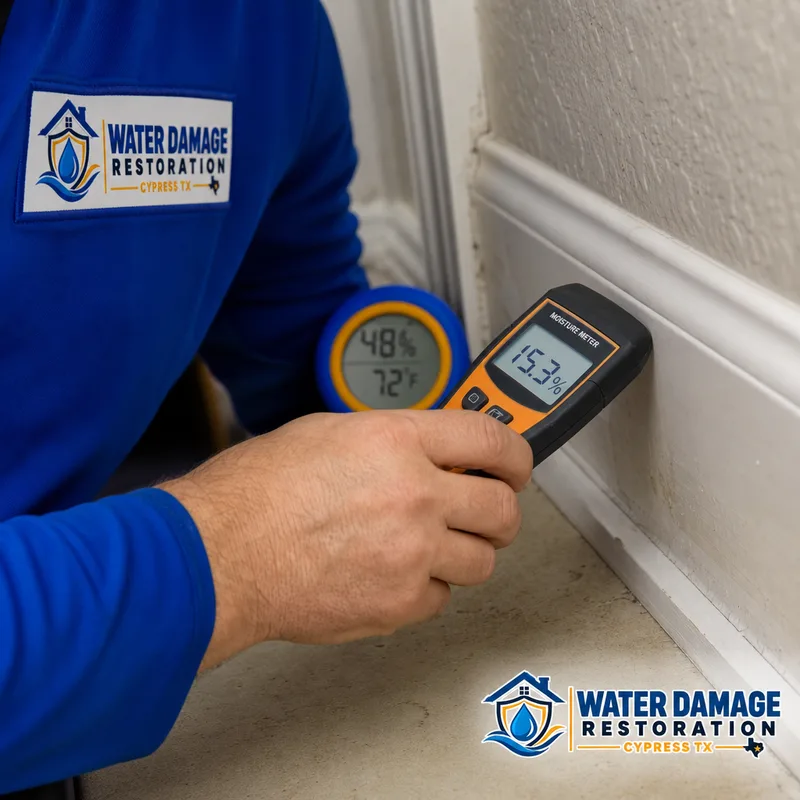
Non-invasive readings find wet areas behind finishes and under floors, then guide a plan based on what is actually affected.
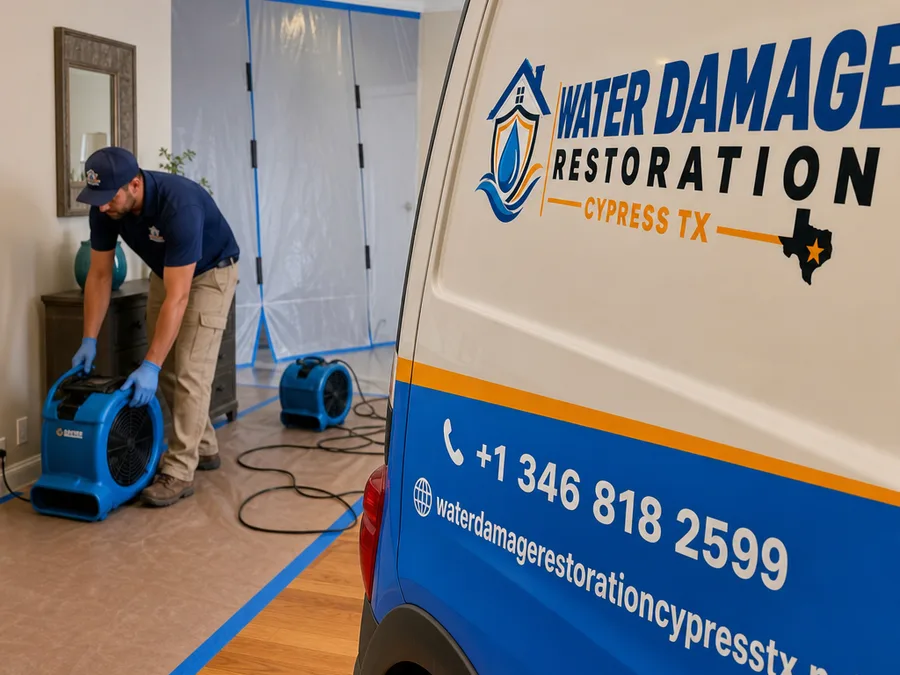
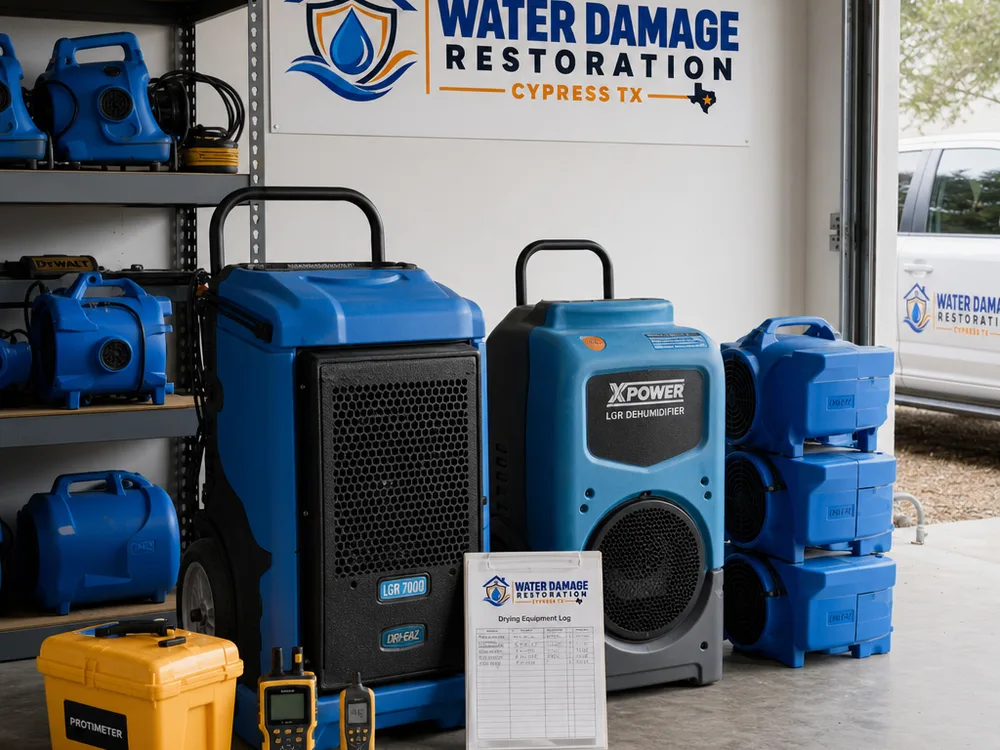
Air movers and dehumidifiers are set for the room layout and materials present, with adjustments as the drying chamber changes.
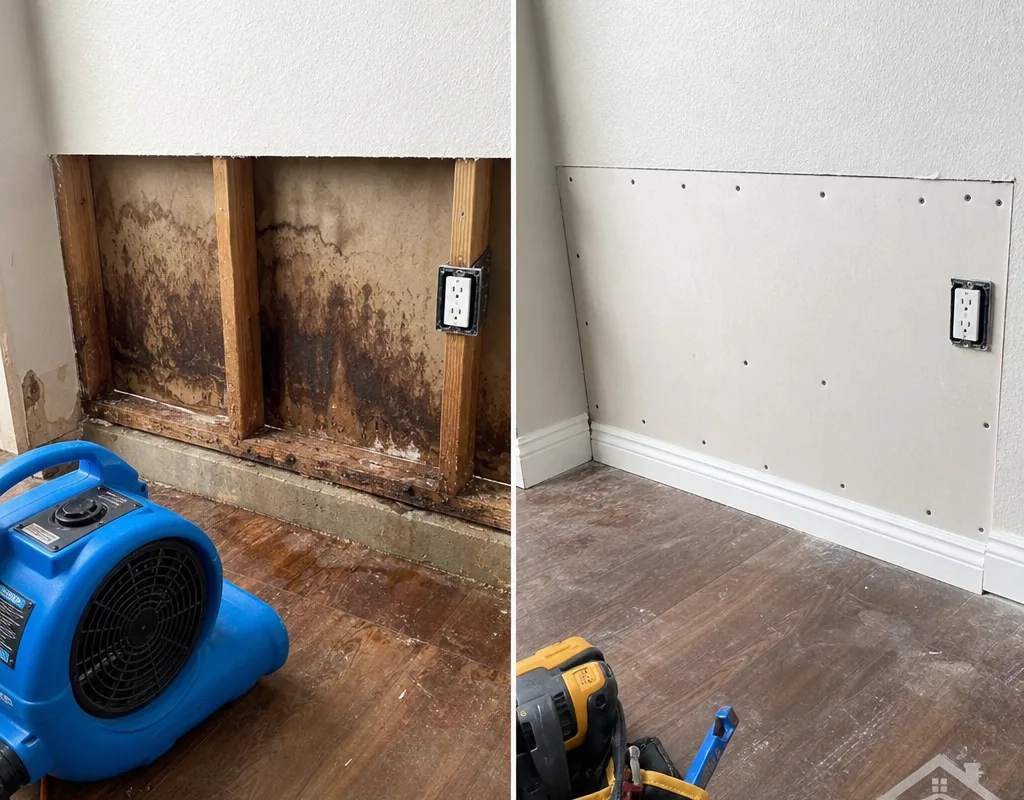
Selective removal of wet drywall, baseboards, insulation, or floating floors when drying in place is not realistic or would trap moisture.
Affected surfaces are cleaned with targeted deodorization methods appropriate to the water category and impacted materials.
Photos, moisture logs, and a written scope support insurance conversations and keep repairs aligned with what was damaged.
A correct plan starts with identifying the source and the path the water traveled. A supply line leak often saturates wall bottoms and the subfloor near kitchens, laundry rooms, or bathrooms. An HVAC drain backup can wet ceilings and attic insulation. A water heater failure can flood a garage and migrate into adjacent rooms.
We look at the category of water—clean, gray, or contaminated—and the class of loss, including how much material is affected and how porous it is. Those factors drive decisions such as whether carpet padding can be saved, whether drywall needs to be opened, and how aggressive drying must be.
In many Cypress homes, water can wick up drywall quickly and spread under laminate or engineered wood. If trapped moisture remains, it can cause buckling, staining, and persistent odor. That is why we document moisture readings and keep drying equipment running until the structure, not just the air, reaches target levels.
We confirm the leak is stopped and check for electrical and slip hazards. If shutoff assistance is needed, we help identify what must be turned off before work begins.
We extract standing water and reduce secondary damage by protecting furniture legs, isolating affected areas, and removing wet items that can transfer moisture.
We measure affected materials and outline what will be dried in place versus what should be removed, creating a plan you can understand and approve.
We set air movement and dehumidification to match the materials and room layout, then monitor progress with repeat readings and equipment adjustments.
After drying, we address cleaning needs and help plan repairs. Photos and moisture records can support the scope when documentation is required.
Water damage restoration in Cypress typically ranges from about $1,000 to $4,500 for smaller contained losses, while larger multi-room events or water that affected drywall, flooring, and cabinets can run $6,000 to $15,000+ depending on demolition and rebuild needs.
Your actual price depends on how long the water sat, how far it traveled, the water category, the affected materials, access for equipment, and whether contents handling is needed. The exact scope and cost are confirmed after an on-site inspection and moisture mapping.
“A supply line leak soaked our kitchen and the room next to it. They found moisture under the flooring where we never would have guessed, got the drying equipment in place quickly, and kept us updated with readings until everything was dry.”
“What I appreciated most was the documentation. Photos and moisture logs made it easier to understand what had to be removed and what could be saved, and the repair scope matched what we were seeing in the house.”
Drying should start as soon as the source is stopped and it is safe to work, ideally the same day. In humid conditions common around Cypress, wet materials can hold moisture longer, so early extraction and dehumidification helps reduce swelling, staining, and odor.
Sometimes, but it depends on how much water is trapped and how the floor is installed. Floating floors often trap moisture on top of the underlayment or subfloor, and if readings stay high or the floor begins to cup or separate, selective removal is usually the safer choice.
Clean water starts from a sanitary source like a supply line, while contaminated water can come from drains, overflow, or outside flooding and needs stricter handling. The category affects what materials can be saved, how cleaning is performed, and what PPE and disposal steps are appropriate.
Many homeowners can stay, but you should expect noise, warm air movement, and restricted access to affected areas. If a bathroom or kitchen is heavily impacted, or contaminated water is involved, it may be more practical to stay elsewhere during the initial phase.
If it is safe, stop the water source, shut off power to wet areas, and move small valuables away from the wet zone. Avoid running fans into wall cavities without an assessment, because it can push moisture into places that are harder to dry.
Yes, we can document conditions and work performed with photos and moisture readings, plus a written scope of what was affected and what steps were required. That documentation helps keep the repair plan tied to measurable moisture conditions rather than guesswork.
A typical structural drying phase often takes 3 to 5 days, but timelines vary with humidity, airflow, how saturated the materials are, and whether cavities were opened. We confirm progress with repeat moisture readings, not by the calendar.
If you are dealing with water intrusion now, the next best step is an on-site moisture inspection and a clear plan for extraction, drying, and repairs so the damage does not spread behind the walls or under the floors.
Call for Emergency HelpDescribe what happened and what areas are wet, and we will guide you through immediate next steps, schedule an inspection, and provide a written scope you can use to move forward with repairs.