
Containment that protects the rest of the home
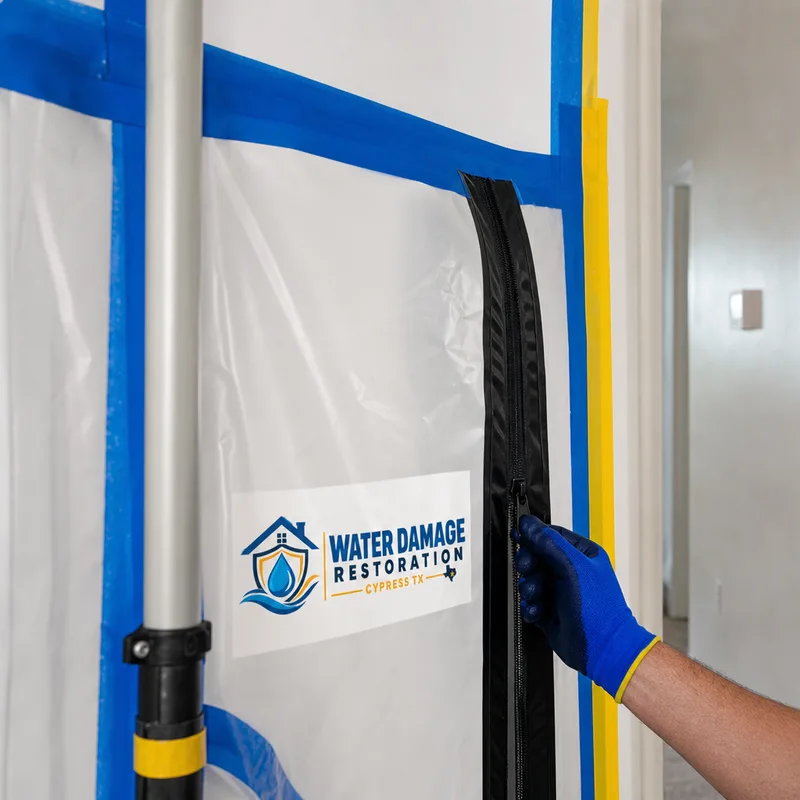
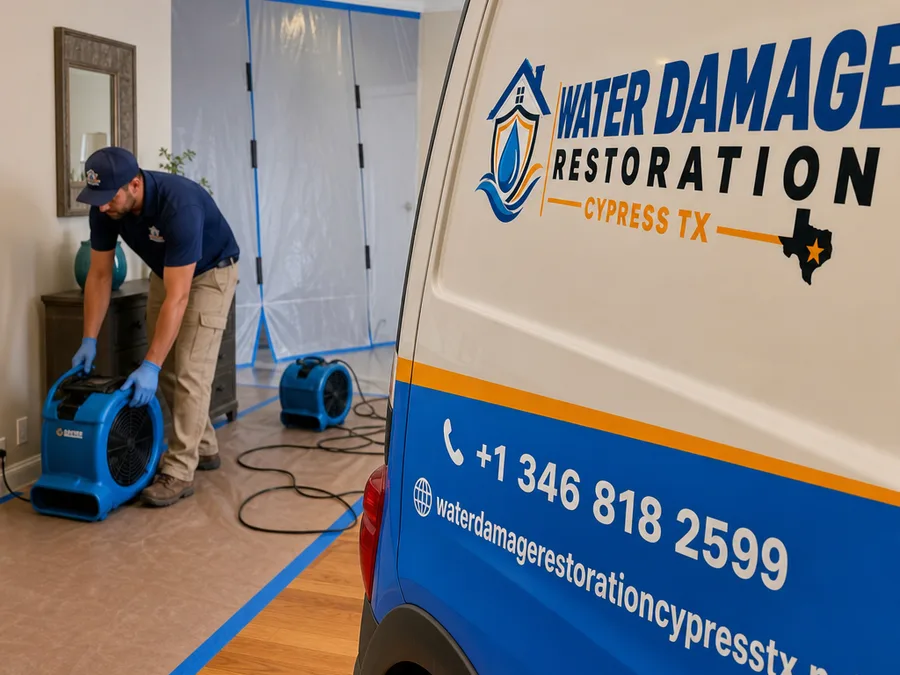
We isolate the affected area with plastic sheeting, negative air when appropriate, and controlled entry so spores do not migrate into living areas or HVAC returns.
Serving Cypress, Texas & surrounding areas
24/7 Emergency Response
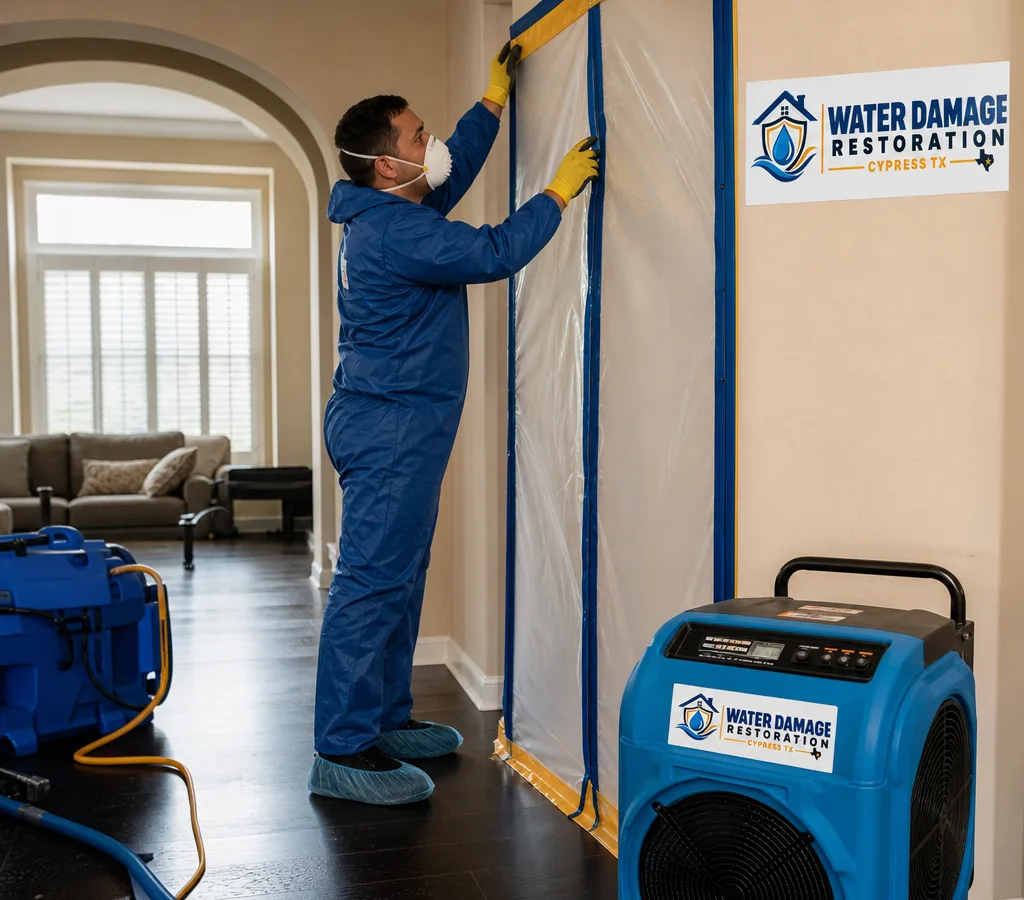
If you see staining, smell a musty odor, or had a recent leak, we can inspect, contain, remove, and verify the cleanup so the problem does not keep coming back.
When someone searches for mold removal Cypress TX, they are usually dealing with one of three situations: a visible patch that keeps returning, a musty smell after a plumbing issue, or a water event that never fully dried out. In Cypress, high humidity and frequent HVAC use can keep moisture moving through attics, closets, and wall cavities, which is why surface cleaning alone often fails.
Our approach is straightforward: find the moisture source, keep spores from spreading, remove contaminated materials when required, clean with HEPA filtration and professional methods, and confirm conditions are safe to rebuild or reoccupy. Water Damage Restoration Cypress TX provides mold remediation for homes and small commercial spaces across Cypress (ZIP 77410) with a written scope, clear communication, and work that is designed to pass real-world scrutiny, not just look better for a week.
We isolate the affected area with plastic sheeting, negative air when appropriate, and controlled entry so spores do not migrate into living areas or HVAC returns.
Mold follows water. We check likely pathways such as roof penetrations, plumbing walls, window frames, and condensate lines so cleanup is not disconnected from the cause.
Some materials cannot be reliably cleaned once contaminated—commonly drywall, insulation, and some soft goods. When that is the case, we remove and dispose according to the scope.
HEPA vacuums, air scrubbers, and careful wipe-down techniques reduce remaining particulate so you are not left with hidden residue and recurring odor.
If the area is still damp, remediation is incomplete. We coordinate drying targets and practical steps to keep indoor humidity in a safer range after the work.
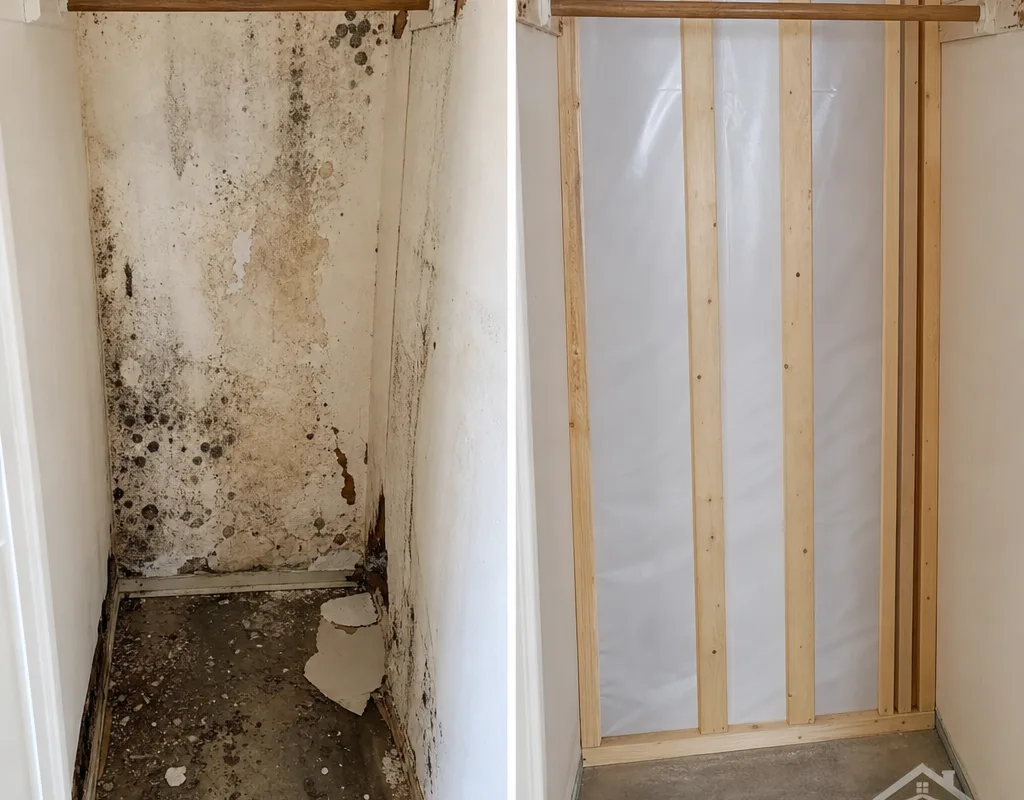
You get before-and-after photos of key areas and a clear description of what was removed, cleaned, and treated so you can make confident next decisions.
Mold can grow anywhere there is ongoing moisture and a food source, but certain spots show up repeatedly in Cypress.
Bathrooms and laundry rooms often point to chronic humidity, poor exhaust, or slow plumbing leaks behind fixtures. Closets on exterior walls can hide condensation issues, especially when air circulation is limited. Kitchens commonly develop problems under sinks, behind dishwashers, and around refrigerator water lines. Attics can be affected by roof leaks, bathroom fan venting problems, or HVAC duct sweating.
The key is interpreting what you are seeing. A small visible patch does not always mean a small problem, and a strong musty odor can come from a hidden cavity even when surfaces look clean. We inspect for moisture, decide what needs to be removed versus cleaned in place, and build the containment and filtration plan around the layout of the home.
If the mold followed a leak or flood, our team can coordinate the remediation with water damage restoration so drying and cleanup are handled in the right order and you are not paying twice for overlapping steps.
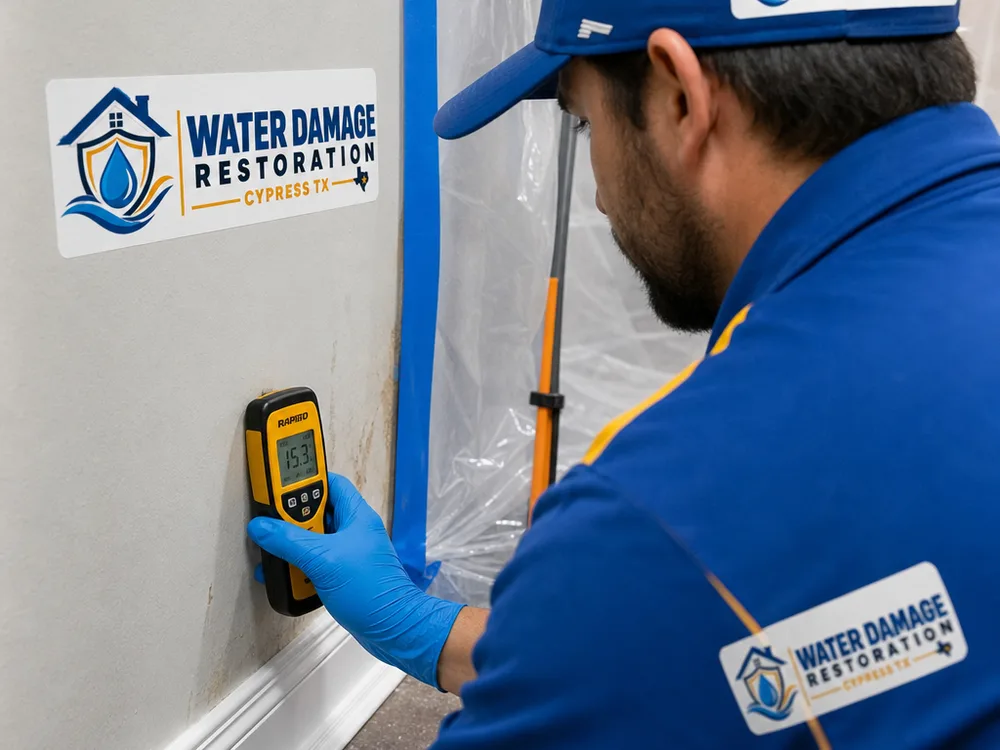
We look at the affected materials, measure for moisture, and identify likely sources. Then we outline what areas need containment and what materials are candidates for removal.
We set barriers, establish controlled access, and run HEPA filtration as needed. This step is what prevents a small job from turning into a whole-house cleanup.
Contaminated drywall, insulation, and other porous materials are carefully removed and bagged out through the controlled pathway to limit cross-contamination.
We clean remaining structural surfaces and contents within the scope using HEPA equipment and appropriate cleaning agents based on the material and condition.
We confirm the space is dry enough to move forward. If you plan third-party testing, we coordinate the timing so the area is in a proper condition for sampling.
Most mold remediation projects in Cypress typically range from about $900 to $6,000+, depending on how much area is affected and whether demolition is required. A small, contained cleanup in a bathroom or under a sink may land in the lower end, while multi-room or attic work with drywall and insulation removal tends to price higher.
Your final cost depends on containment complexity, how much porous material must be removed, access such as tight attics and crawlspaces, and whether drying equipment is needed. The exact price is confirmed after an on-site inspection and written scope.
Scheduling depends on current demand, but we prioritize active moisture and post-leak situations because conditions can worsen quickly in humid weather. After you reach out, we will set an inspection time, review the affected areas, and give you a written scope so you can make a decision before work begins.
Testing is not always required to start remediation when there is visible growth and a clear moisture issue, but it can be helpful when you suspect hidden mold or need documentation for a transaction or claim. If you want third-party sampling, it is best done by an independent inspector so results stay unbiased and the remediation scope stays clear.
Porous materials such as drywall and fiberglass insulation are often removed when they are contaminated because they are hard to clean reliably once growth is established. We confirm this during the inspection and show you exactly what is affected so removal is limited to what is necessary.
Many projects can be completed while the home is occupied if the work area can be contained and the HVAC impact is managed, but it depends on the location and size of the affected area. We will tell you up front if temporary relocation, room isolation, or HVAC shutdown in the work zone is recommended.
If mold is suspected in ducts or on HVAC components, the first step is confirming where the contamination is and why moisture is present. We can coordinate next steps, but duct cleaning or HVAC component service may require a specialized HVAC provider depending on what is found and what parts are affected.
Avoid disturbing the area, do not run fans that blow directly across visible growth, and keep doors to the affected room closed if possible. If the issue followed a leak, stop the water source and keep a record of what happened, because those details help define the right containment and removal plan.
If you are seeing recurring mold or dealing with odors after a leak, the next step is a professional inspection and a written remediation scope you can trust.
Call for Emergency HelpTell us what you are noticing and where it is happening. We will schedule an inspection, explain the containment and removal approach, and provide straightforward pricing based on the actual conditions in your home.